
Mastering Backlog Refinement: A Practical Guide to Building the Right Thing
If you're reading this, chances are you and your team are striving for a more productive and effective way to work. You're not alone. In the fast-paced world of software development, the ability to adapt and plan effectively is what separates good teams from great ones.
This article tackles one of the most critical—and often misunderstood—practices in agile development: Backlog Refinement. We'll break down common mistakes and clarify the ambiguities that often derail this process. While some concepts may seem basic at first, building a strong foundation is the key to reaching new heights of efficiency and focus.
Let's dive in and demystify the art of backlog refinement.
What is Backlog Refinement?
Backlog Refinement (formerly known as "backlog grooming") is the ongoing process of reviewing, discussing, and preparing items in the Product Backlog for future Sprints. The goal is to ensure that the items at the top of the backlog are well-understood and ready for the development team to take on.
In agile, refinement replaces the traditional, exhaustive upfront planning of predictive project management. Instead of a project manager decomposing the entire scope and getting detailed estimates for every task, agile teams refine work just in time, focusing only on what's coming up next.
What Does It Mean to "Refine" a Backlog Item?
To refine a backlog item is to make it actionable. It's the process of transforming a vague idea into a clear, well-defined piece of work that a developer can execute with confidence.
This involves:
Clarifying Doubts: Answering all "what," "why," and "how" questions related to the item.
Estimating Effort: Understanding the complexity and size of the work involved.
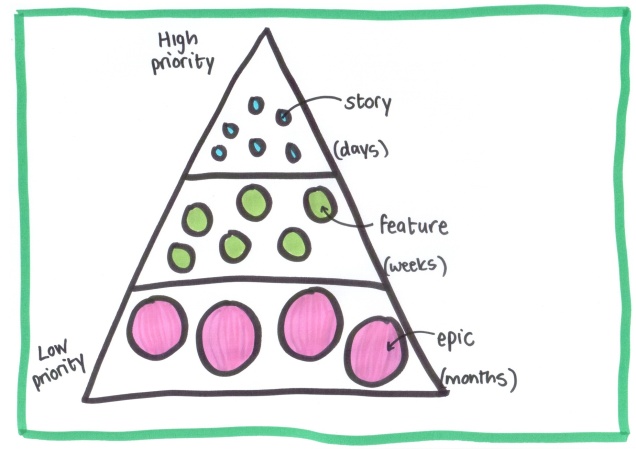
Decomposition: Breaking down large, complex items into smaller, more manageable tasks.
Identifying Dependencies: Recognizing if the item depends on other tasks or external factors.
Checking Resources: Ensuring the team has the necessary skills and tools to complete the work.
Is Refinement a Process or a Meeting?
This is a crucial distinction: Refinement is a process, not a single meeting.
While many teams formalize it with a dedicated "Backlog Refinement meeting," the act of refinement can happen in many ways throughout a Sprint:
Informal conversations between the Product Owner and a few developers.
A quick huddle to discuss a technical spike.
A design session to flesh out a user story.
Any activity that improves the collective understanding of a backlog item is part of the refinement process.
Who Participates in Backlog Refinement?
Refinement is a collaborative effort. The key participants are:
The Product Owner (PO): Responsible for prioritizing the work and ensuring it aligns with the product vision and business goals.
The Development Team: Responsible for executing the work. Their technical expertise is vital for understanding complexity, identifying risks, and breaking down items effectively.
Together, they bridge the gap between business requirements and technical implementation, ensuring that backlog items are both valuable and feasible.
What Exactly Gets Refined?
The focus of refinement is always on the top of the Product Backlog.
Whether you call them stories, tasks, issues, or tickets, the goal is the same: to turn abstract concepts into executable work.
Attempting to refine the entire backlog is a common mistake and a waste of time. Items further down the backlog relate to medium- and long-term goals, which are likely to change or even be abandoned. Focus your energy where it matters most—on the work that is coming up in the next one or two Sprints.
Why is Backlog Refinement Necessary?
Just as detailed planning is essential in a predictive model, refinement is fundamental to agile success.
For the Development Team: It provides clarity on the upcoming scope and helps them focus on short-term business objectives. It reduces uncertainty and enables a more sustainable pace.
For the Product Owner & Stakeholders: It provides a realistic understanding of the technical complexity involved in achieving business goals, leading to better forecasting and decision-making.
Without proper refinement, the opposite occurs. The team works without clear objectives, stakeholders are disconnected from technical realities, and there is constant pressure from scope changes and undefined deadlines.
Who is Responsible for Refinement?
Officially, the Product Owner is accountable for managing the Product Backlog, which includes ensuring that items are refined before a new Sprint begins.
However, the entire Development Team shares in the responsibility. They are the ones who suffer when backlog items are poorly defined, leading to pressure and confusion during the Sprint. Therefore, it's in their best interest to actively participate and push for effective refinement sessions.
When Does Refinement Happen?
Refinement is an ongoing activity that takes place throughout the current Sprint in preparation for the next one.
It doesn't make sense to do it earlier (e.g., in the previous Sprint), because the world is fluid. New ideas emerge, priorities shift, and customer feedback arrives. You plan for the current Sprint, and then you refine for the next one.
Refinement should happen before the Sprint Review and Retrospective. The Review may result in unfinished items returning to the backlog, and the Retro may generate new improvement tasks. By the time you get to Sprint Planning, the backlog should already be in a well-prepared state.
How is a Refinement Session Conducted?
During a refinement session, the Product Owner walks the team through the prioritized items at the top of the backlog, clarifying functional requirements, use cases, and the "why" behind each task.
For each item, the development team provides their expert opinion on its complexity. This can be done using T-shirt sizes (S/M/L), story points (Fibonacci sequence), or any other scale the team agrees upon.
If an item is deemed too large or complex (e.g., an "XL" or a 13-point story), the team collaborates to break it down into smaller, more manageable pieces. The goal is for every refined item to be as atomic as possible, with all questions answered, so it can be worked on efficiently.
If We Plan in Refinement, What Happens in Sprint Planning?
This is a common point of confusion. The two ceremonies serve different, complementary purposes:
Backlog Refinement is the process of getting backlog items "Ready."
Sprint Planning is the event where the team commits to a set of "Ready" items for the upcoming Sprint and creates a plan to achieve the Sprint Goal.
At the start of Sprint Planning, the Product Backlog should already contain a healthy set of refined items from three sources:
Ongoing Refinement: Items prepared during the previous Sprint.
Sprint Review: Unfinished work that was re-prioritized.
Sprint Retrospective: Actionable improvement tasks.
Therefore, Sprint Planning becomes a much smoother and more focused event. The primary activity is selecting the work for the Sprint Backlog and discussing the execution plan, not trying to understand the work for the first time.
Conclusion
Thank you for reading. I hope this guide has clarified the purpose and practice of backlog refinement. It is a cornerstone of any healthy agile environment.
If you have questions or want to discuss a specific scenario, please share your thoughts. Let's continue to learn and improve together. And don't forget to share this with your teammates—a shared understanding is the first step toward a better agile process.


I generally want quality content and this thing I found in your article. It is beneficial and significant for us. Keep sharing these kinds of articles, Thank you.Short-term business finance specialists Australia
ReplyDelete